
Why Every Modern Business Needs a CRM System
A CRM system helps businesses manage leads, customers, follow-ups, sales pipelines, communication history, and customer relationships from one organized platform instead of losing opportunities in scattered tools.
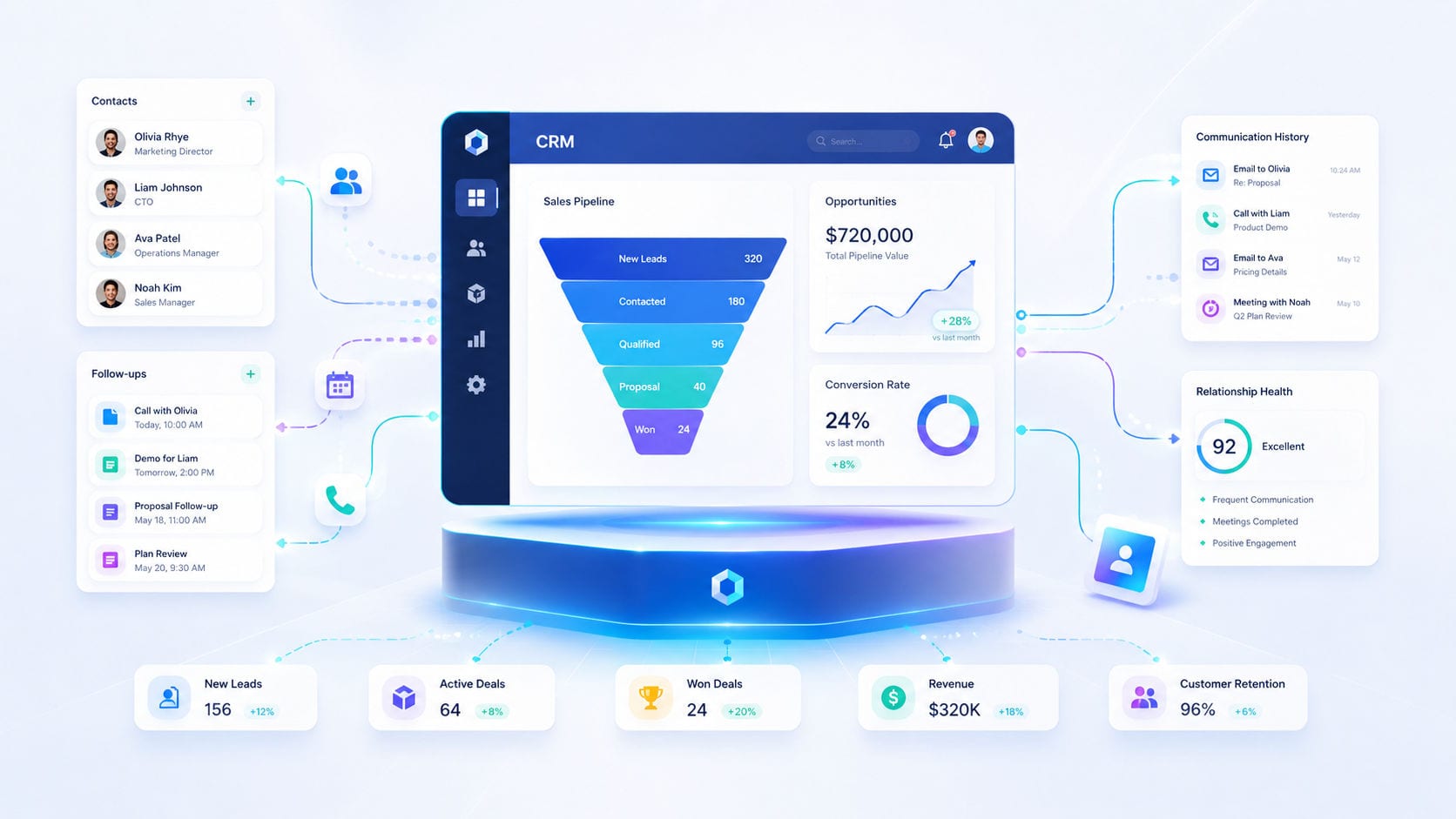
Customers are the core of every business, yet many growing companies still manage client relationships through scattered tools. Leads arrive from web forms, phone calls, messaging apps, and emails. Without a centralized Customer Relationship Management (CRM) system, these opportunities are easily missed, duplicated, or forgotten.
A CRM system provides a single source of truth for your customer relationships. It consolidates lead data, sales pipelines, follow-ups, and communication history into one structured platform, giving your team the visibility needed to scale sales operations.
1. Automated Lead Capture & Pipeline Management
When leads are scattered across spreadsheets and email threads, sales cycles stall. A CRM creates a structured pipeline that moves prospects smoothly from initial inquiry to final conversion.
Instant Lead Routing: Capturing inquiries from marketing campaigns and forms, then assigning them automatically to the correct sales agent.
Visual Sales Pipelines: Grouping opportunities by clear stages (e.g., New Lead, Contacted, Proposal Sent, Won, Lost).
Duplicate Prevention: Merging records automatically to ensure sales reps do not pitch the same account.
2. Eliminating Missed Opportunities: Automated Follow-Ups
Most B2B sales require multiple follow-ups, yet many leads drop out of the sales cycle simply due to manual oversight.
Task Reminders: Setting automatic tasks for sales representatives based on client activity (e.g., "Call client 3 days after sending proposal").
Automated Alerts: Notifying managers immediately when a high-value lead is left untouched for over 24 hours.
Email Sequences: Triggering automated follow-up sequences to keep cold leads engaged.
Discover how we build custom automation systems in AI And Automation Systems.
3. A 360-Degree View of the Customer Profile
To deliver professional service, your team needs immediate access to a client's complete transaction and interaction history.
A unified CRM profile includes:
Communication Logs: Email threads, call notes, and support tickets in a single timeline.
Document Management: Quick access to signed contracts, proposals, and past invoices.
Service Context: Allowing account managers to view past customer service issues before hopping on a renewal call.
4. Executive Dashboards for Sales Visibility
Business owners cannot manage what they do not measure. CRM analytics turn raw interaction data into actionable sales reports.
Conversion Metrics: Identifying which marketing channels (ads, referrals, organic search) generate the highest-value customers.
Performance Tracking: Measuring sales team activity levels, response times, and close ratios.
Revenue Forecasting: Estimating future sales volume based on the value of active deals in your pipeline.
5. Bridging the Gap Between Sales & Support
A customer's journey doesn't end when a contract is signed. Connecting sales data with your support ticketing system ensures a seamless client experience.
Support Integration: Allowing helpdesk agents to see the client's tier and sales history when handling a support ticket.
Retention Tracking: Flagging accounts with high support ticket volumes to reduce churn risks.
Up-sell Triggers: Alerting the account executive when a customer is ready for a plan upgrade.
The Power of a Custom CRM Solution
Off-the-shelf CRM products are often overloaded with bloated features and charge expensive monthly license fees. For businesses with unique operating procedures, a custom CRM is the most cost-effective and powerful route.
A custom CRM solution is engineered around your exact workflow—including custom data fields, specific report dashboards, role-based access rules, and deep integrations with your existing ERPs and billing platforms.
Want to build a custom CRM built for your exact operational workflow? Let’s design your CRM system architecture through our Guided Discovery Intake or consult our engineering team at Motive Solutions Contact.